

Murder Mystery Logic Puzzles: How They Work and How to Solve Them
A complete beginner’s guide to murder-mystery logic puzzles: the rules, the clue types, and a repeatable method for solving every case without guessing.

Arena Editorial Team
2026-07-18 • 8 min read

Murder-mystery logic puzzles ask you to do what a detective does: take a handful of witness statements and reason out exactly where everyone was, until only one conclusion remains. There is no trivia and no luck — every case can be solved by pure deduction. This guide covers how they work and gives you a method that solves any case, from a gentle 4×4 up to a devious 7×7.
The setup: a grid, some rooms, and suspects
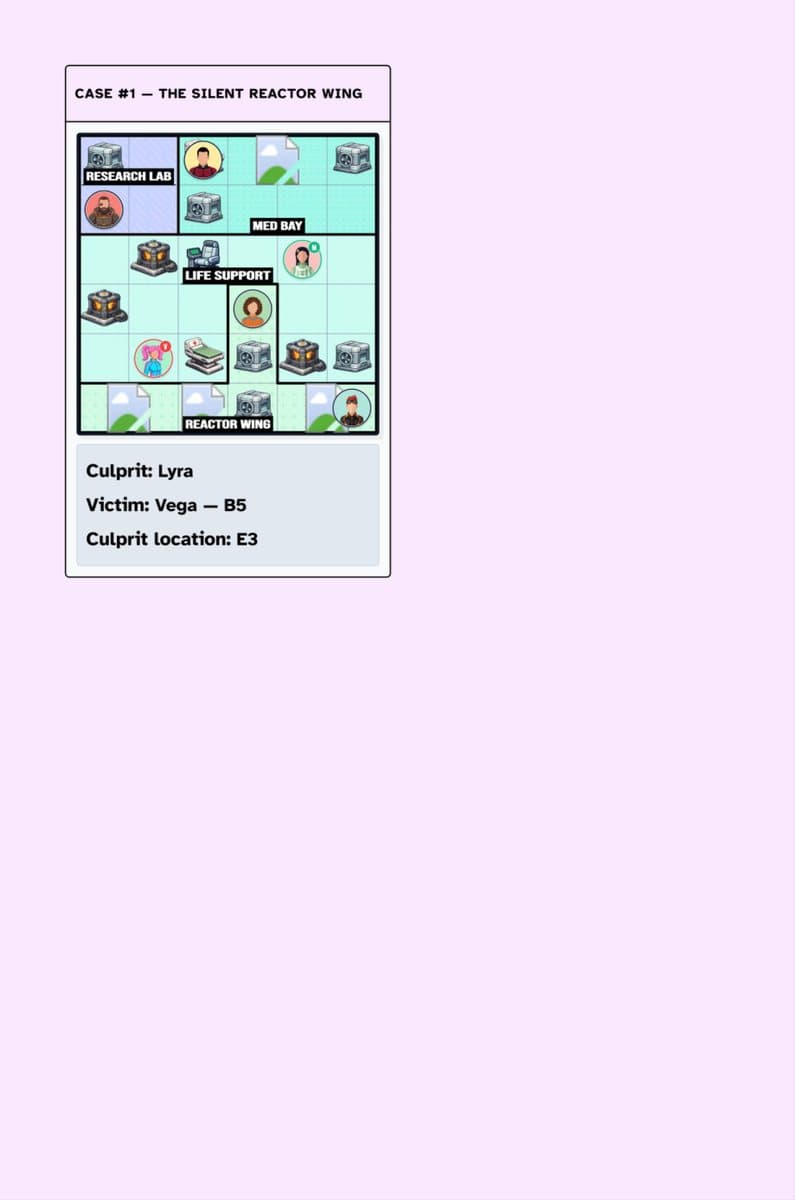
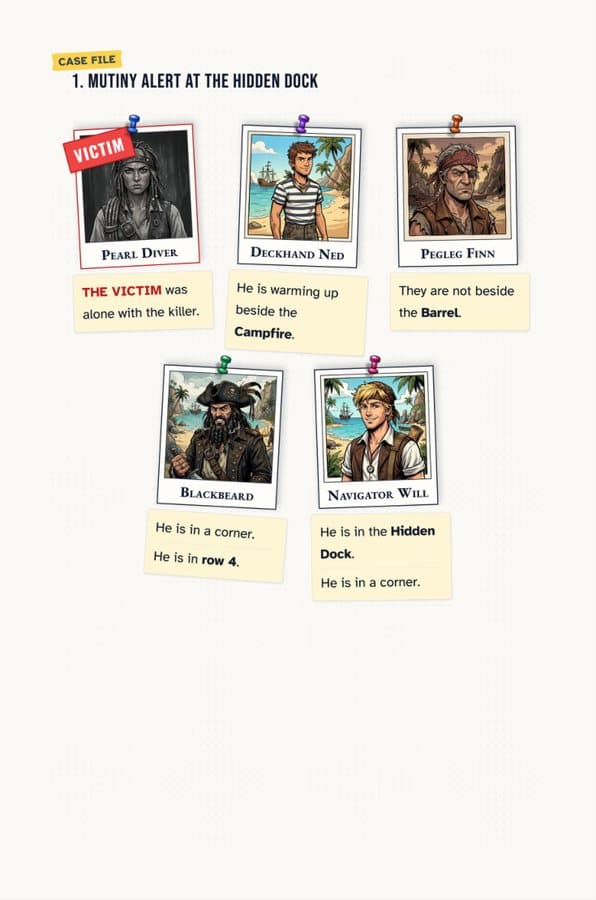
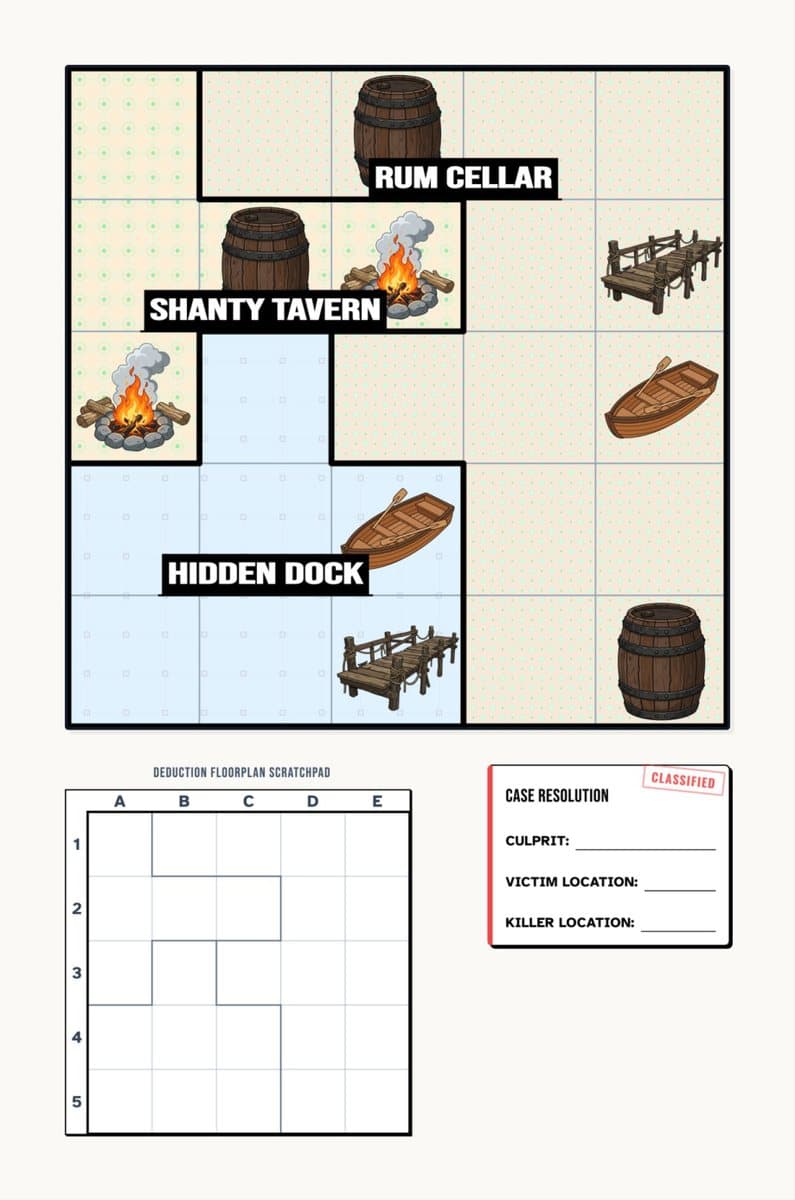
Each case is a square grid — the crime-scene floor plan — divided into rooms and dotted with furniture. Some squares are blocked by objects nobody can stand on; others are open. A small cast of suspects each left a statement about where they were, and one of them is the victim. Your job is to place every suspect on the grid so that all the statements are true.
The one hard rule: one per row, one per column
Sudoku logic drives everything. No two suspects share a row, and no two share a column. That single constraint is what makes the puzzle solvable: every time you pin one suspect to a square, you eliminate that suspect’s row and column for everyone else. Chains of eliminations are the engine of the whole solve.
The clue types you’ll meet
- In a room: the suspect stands somewhere inside a named room.
- On or beside an object: they occupy, or sit orthogonally next to, a piece of furniture — walls block “beside”.
- In a corner (or not): a corner is any square where a horizontal wall and a vertical wall meet, including a room’s inner corners.
- In a column or row: they’re somewhere along a lettered column or numbered row.
- Alone in a room: exactly one suspect is in that room.
Reading these keywords precisely is half the battle. Two of them — “corner” and “beside” — trip up almost every new solver, so they each get their own guide below.
The method: three steps, every time
- Mark the certainties. Go clue by clue and shade in every square each suspect could possibly occupy. Positive clues (“in the Hall”) shrink a suspect to a few squares; negative clues (“not in a corner”) cross squares off.
- Cascade the eliminations. The moment any suspect has only one possible square, place them — then wipe their row and column from everyone else’s options. This usually triggers a chain: one placement forces the next.
- Make the arrest. When everyone is placed, look at the victim’s room. Whoever is alone there with the victim is the killer.
Work the most-constrained suspect first
Whoever has the fewest possible squares after step one is your best lever. Placing them tends to unlock the widest cascade of eliminations, so you spend less time staring at a full grid.
Common mistakes
- Treating “beside” as diagonal — it isn’t, and walls block it.
- Thinking only the four grid corners count — room corners count too.
- Forgetting to re-apply the row/column rule after every single placement.
- Guessing. If you’re guessing, there’s a clue you haven’t fully used — every proper case has exactly one logical solution.
That last point is a guarantee, not a slogan: every Crime Scene Sudoku case is machine-verified to have one and only one solution. Here’s how that verification works, if you’re curious — and the precise definitions of the two trickiest keywords:
Practice on a real case
The fastest way to learn is to solve one. New printable cases go up free regularly, and joining the newsletter gets you five cases plus the full tutorial to start.
Search Articles
Categories
Recent Articles
Love Word Search Puzzles?
Get puzzle tips, new book releases, and brain-boosting content straight to your inbox.