

Behind the Cases: How a Computer Proves Every Mystery Has One Solution
“No guessing” isn’t a marketing line — it’s a proof. Here’s how every Crime Scene Sudoku case is machine-verified to have exactly one logical solution.

Arena Editorial Team
2026-07-15 • 6 min read
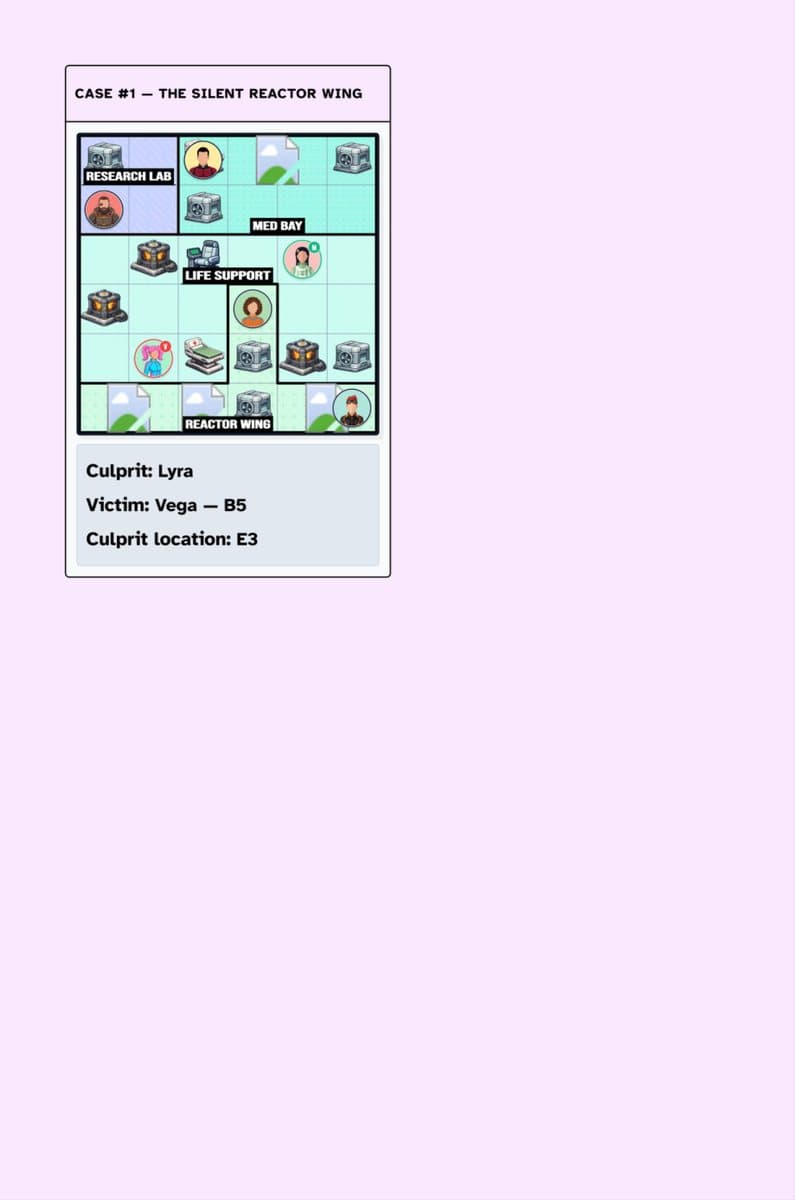
Plenty of puzzle books promise “no guessing.” Ours can prove it. Before any case reaches a page — free, printed or in a pack — it passes through an automated gauntlet designed to catch the one thing that ruins a logic puzzle: ambiguity. Here’s what that check actually does.
1. Exactly one solution, proven
A constraint solver takes the finished clue set and searches the entire space of possible suspect arrangements. If it finds zero solutions, the case is broken. If it finds two or more, the case is ambiguous — solvable only by guessing between them — and it’s thrown out. Only cases with precisely one valid arrangement survive.
2. Every clue is actually true
A second, independent checker — written separately from the clue generator on purpose — re-reads every statement against the real grid. If the generator and the checker ever disagree about what “beside” or “corner” means, the case fails. That redundancy is why the keyword definitions are so exact: two different pieces of code have to agree on them.
3. The reveal is well-defined
Finally, the murder rule is checked: exactly one suspect must share the victim’s room, and that suspect must be the unique culprit. No shared-room ties, no way to reach the same reveal by a different route.
What this means for you
Whenever you’re stuck, it is never the puzzle’s fault. There is always a next deduction hiding in a clue you haven’t fully used — which is exactly what makes finishing one so satisfying.
It also means the difficulty is honest. A “hard” case is hard because the chain of deductions is long, not because it’s vague. If you enjoy that kind of clean, guaranteed logic, there’s a fresh case waiting.
Search Articles
Categories
Recent Articles
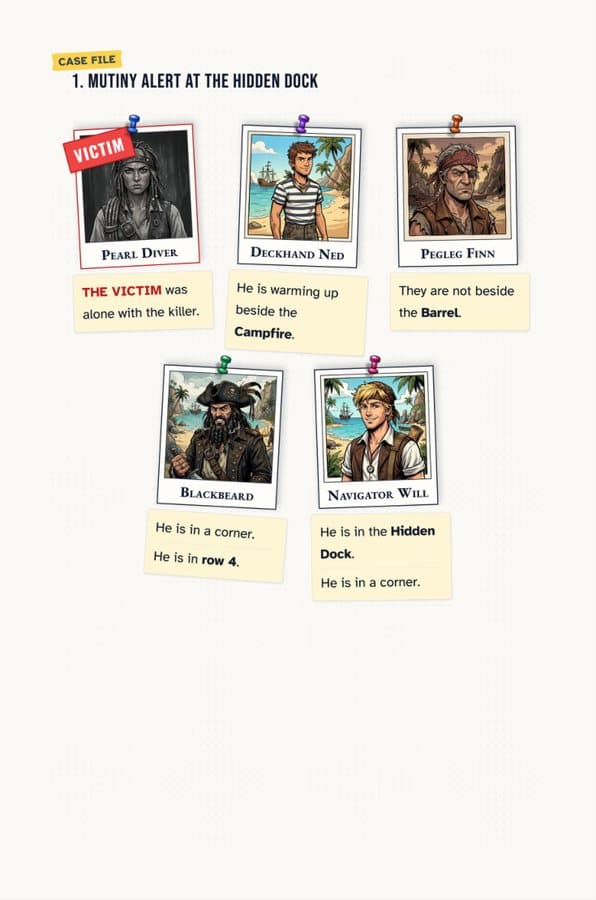
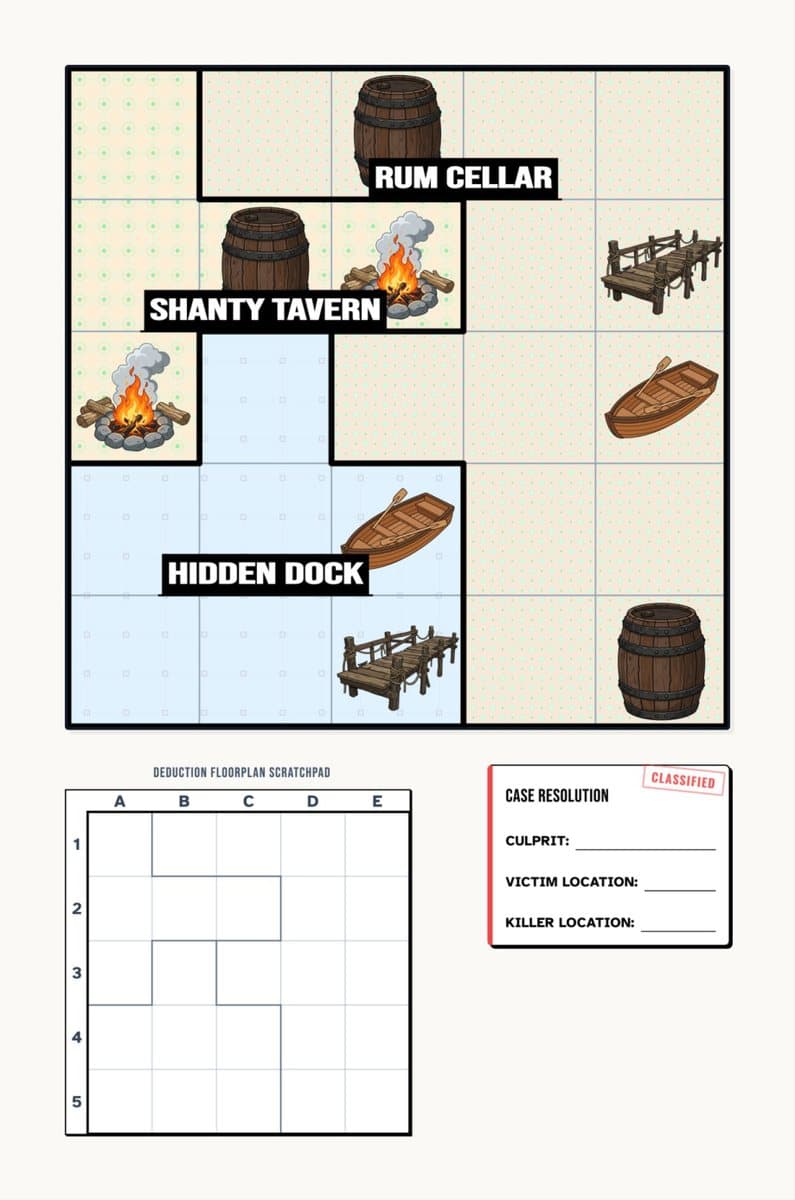
Love Word Search Puzzles?
Get puzzle tips, new book releases, and brain-boosting content straight to your inbox.