

What Counts as a Corner in a Logic Puzzle?
“In a corner” clues confuse almost everyone. Here’s the exact definition of a corner in a grid logic puzzle — and why room corners count too.

Arena Editorial Team
2026-07-17 • 5 min read
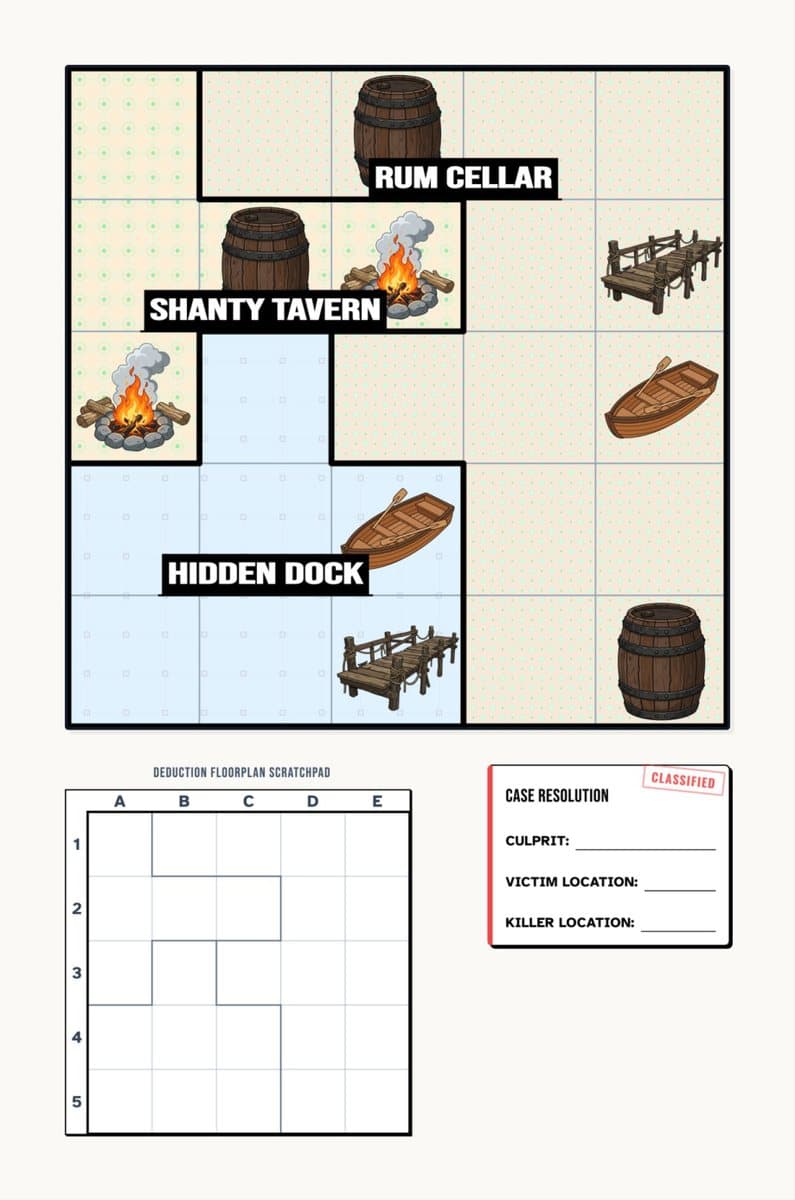
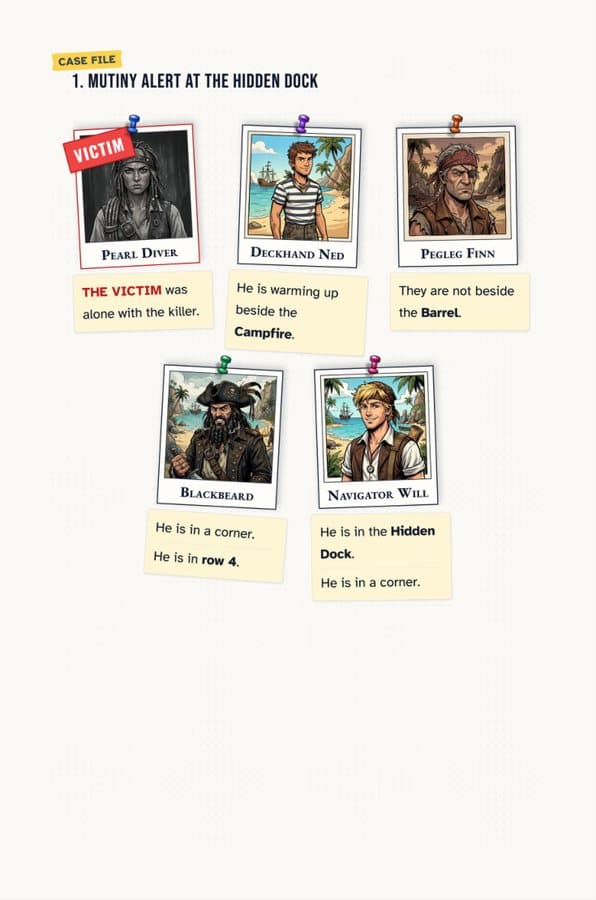
If one clue quietly ruins more solves than any other, it’s the corner clue. “The gardener is not in a corner” sounds obvious — until you realise most solvers have the wrong definition of “corner” in their heads. Get it right and these clues become some of the most powerful on the board.
The definition
A corner is any square where a horizontal wall and a vertical wall meet. That’s it. A wall is any edge where a room ends — either the outer boundary of the grid, or the line between two different rooms.
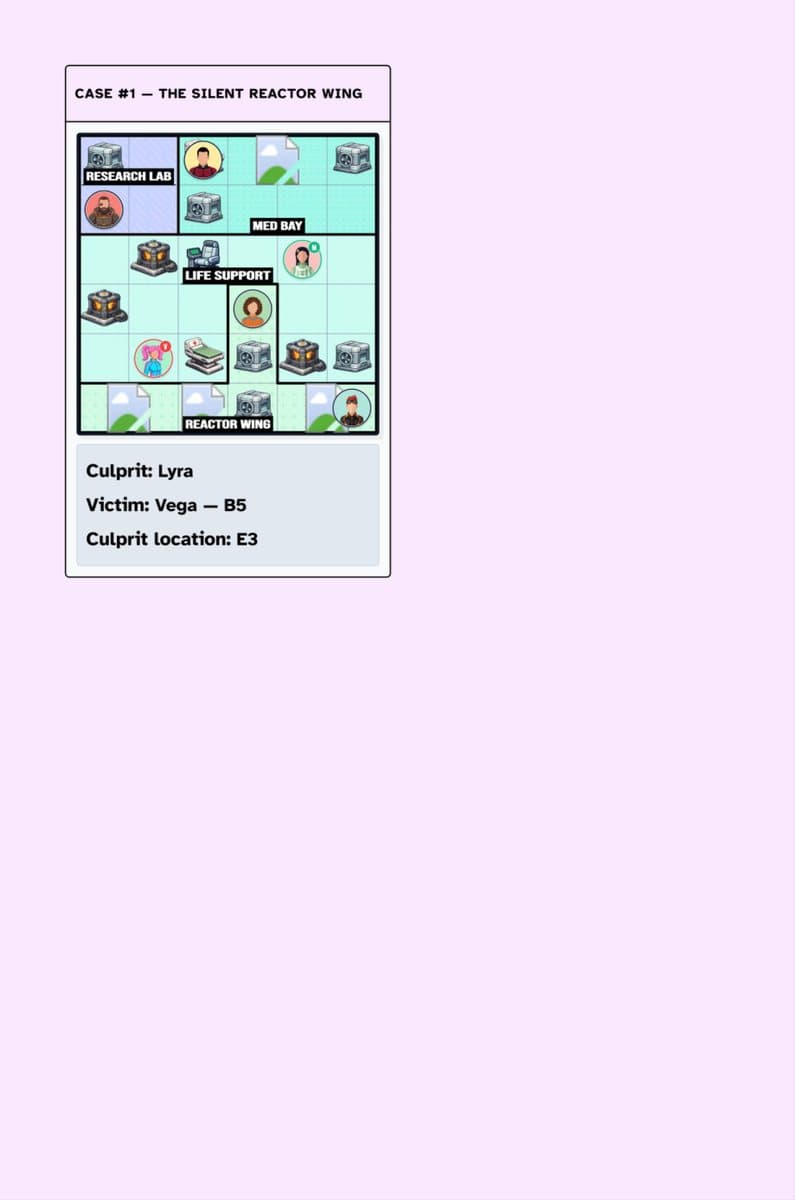
The crucial consequence: corners are not just the four corners of the whole grid. Every room has its own corners, tucked inside the puzzle, wherever that room’s walls turn. An L-shaped room can have several.
Corner vs. corridor
Two parallel walls do not make a corner. A square with a wall on its left and right — a corridor cell — is not a corner, because both walls run the same direction. You need one horizontal wall and one vertical wall meeting at the same square. Think of it as an L, not a pair of tram tracks.
How to spot every corner fast
Trace each room’s outline. Every place the outline makes a 90° turn, the square on the inside of that turn is a corner. Mark them all before you touch a “corner” clue and it becomes a simple lookup.
Why it matters so much
“Not in a corner” can eliminate a surprising number of squares at once — often across several rooms — which is exactly the kind of wide cut that kicks off a cascade of placements. Solvers who under-count corners leave that power on the table; solvers who over-count (assuming only grid corners) make false eliminations and end up stuck or guessing.
Once corners click, the rest of the clue vocabulary is easy. The companion guide breaks down “beside”, “alone” and the others.
Search Articles
Categories
Recent Articles
Love Word Search Puzzles?
Get puzzle tips, new book releases, and brain-boosting content straight to your inbox.